
Sweepstakes Casino Legal States 2026: Where You Can Play
 Available in US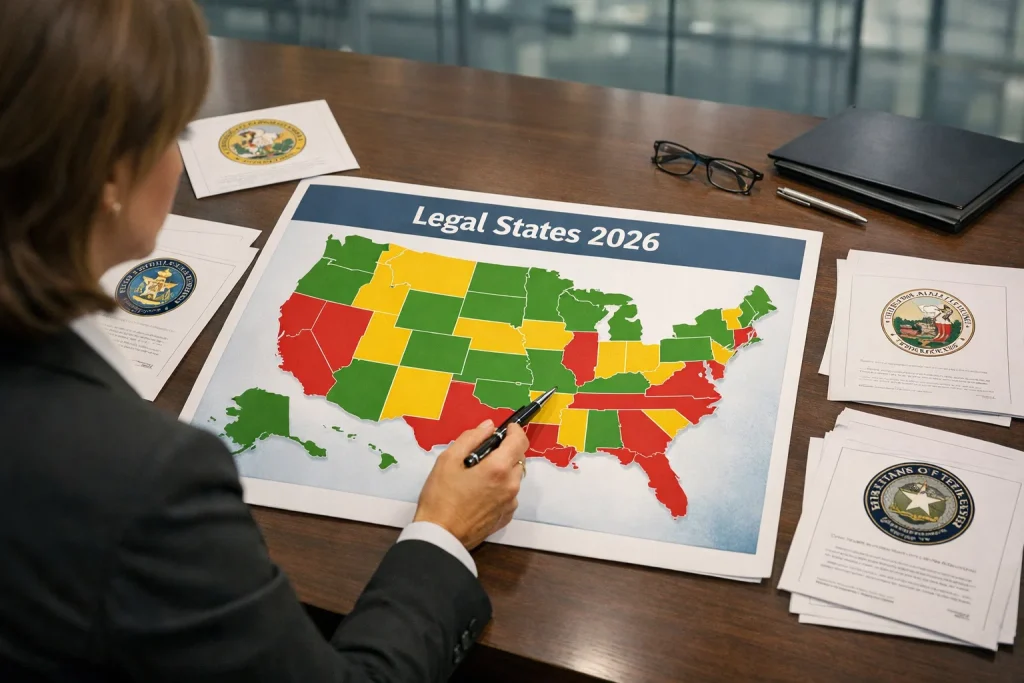
The State-by-State Patchwork
Sweepstakes casino legality in the United States resembles a patchwork quilt sewn by fifty different tailors with fifty different interpretations of the same pattern. Some states welcome these platforms as legitimate promotional sweepstakes falling outside gambling regulation. Others view them as thinly veiled gambling operations that violate state law. A growing number have moved from passive acceptance to active prohibition, sending cease-and-desist letters and enacting specific legislation to shut down the industry within their borders.
The confusion stems from how sweepstakes casinos operate under promotional sweepstakes law rather than gambling statutes. Traditional gambling requires three elements: consideration, chance, and prize. Sweepstakes casinos argue they eliminate consideration through no-purchase-necessary provisions, transforming their operations into promotional giveaways rather than gambling. Whether state attorneys general and legislators accept this argument determines where these platforms can legally operate.
For players, navigating this patchwork requires understanding both current status and directional trends. A state that allows sweepstakes casinos today might prohibit them tomorrow. A state where platforms currently operate might be one attorney general opinion away from mass shutdowns. The regulatory landscape has become increasingly hostile through 2025 and into 2026, with major states taking action that could reshape the entire industry.
This guide breaks down the current legal status across all fifty states, examines the specific situations in key markets, and provides practical guidance for determining whether sweepstakes casinos are legal where you live. The goal is not legal advice but informed awareness of an industry operating in genuinely uncertain legal territory.
States Where Sweepstakes Casinos Are Legal
The majority of American states currently allow sweepstakes casino operations, either through explicit acceptance or passive tolerance. In these states, platforms operate without legal challenge, players can register and play freely, and redemptions process normally. However, “legal” in this context usually means “not yet prohibited” rather than “explicitly authorized.”
Most sweepstakes casinos operate in approximately 40 to 45 states, with exact availability varying by platform. Some operators take conservative approaches, restricting access to states with clearer legal landscapes. Others push boundaries, operating anywhere they have not received explicit prohibition. This variation means checking individual platform availability matters more than assuming general state legality guarantees access to specific sites.
States with established legal gambling frameworks often present simpler situations. Arizona, Colorado, Illinois, Indiana, Iowa, Louisiana, and Ohio have commercial casino industries alongside sweepstakes casino availability. The presence of regulated gambling does not automatically prohibit sweepstakes operations, though it does create political dynamics where traditional casinos might lobby against sweepstakes competitors they view as regulatory arbitrage.
California represents the most significant legal state by market size. Industry analysis suggests California accounts for approximately 20% of all sweepstakes casino revenue, making it the single largest market in the country according to G2E panel discussions reported by iGaming Business. The state’s combination of population, tech-savvy demographics, and lack of legal online gambling alternatives creates ideal conditions for sweepstakes platforms. However, California’s status has become increasingly uncertain as legislation moves through Sacramento.
Texas provides another massive market without legal online gambling. With nearly 30 million residents and no commercial casino industry, Texas players turn to sweepstakes casinos as the primary option for online casino-style entertainment. The state has not taken action against sweepstakes platforms, and operators continue serving Texas residents without apparent legal concern.
Florida, Georgia, and North Carolina represent significant Southeast markets. Florida alone generates substantial sweepstakes casino activity despite the presence of tribal casinos and recent expansion of gambling options. Georgia lacks legal casinos entirely, making sweepstakes platforms an attractive alternative. North Carolina has expanded tribal gaming but has not moved against sweepstakes operations.
The Midwest presents generally favorable territory. Wisconsin, Minnesota, Missouri, Kansas, and Nebraska allow sweepstakes casino access without legal challenge. These states have varying approaches to gambling generally, but none have specifically targeted sweepstakes operations for prohibition.
New England shows mixed patterns. Massachusetts and Connecticut have established gambling industries but allow sweepstakes operations. Rhode Island and New Hampshire present smaller markets without significant regulatory concern. Vermont and Maine allow access at most platforms without active enforcement.
Players in legal states should not assume permanent availability. The trend since 2024 has moved decisively toward restriction rather than acceptance. States that allow sweepstakes casinos today might join the prohibition list following a single attorney general opinion or legislative session. Geographic eligibility should be verified at registration and monitored for changes, particularly for players who accumulate significant Sweeps Coin balances they intend to redeem.
Platform terms of service typically require players to be physically located in eligible states when playing. Using VPNs or other location-masking technology violates terms at every reputable platform and can result in account closure and balance forfeiture. Even players in legal states should ensure they are actually located in that state during gameplay, as traveling to restricted states creates compliance problems despite permanent residence in legal jurisdictions.
Banned States: Washington, Idaho, Nevada, Montana, Michigan
Five states have clearly prohibited sweepstakes casino operations through existing gambling laws, specific legislation, or attorney general interpretation. Players in these states cannot legally access sweepstakes casinos, and platforms that allow such access face potential legal consequences.
Washington stands as the most definitively prohibited state. Washington gambling law broadly prohibits online gambling and has been interpreted to include sweepstakes casinos despite their non-gambling legal framing. The state’s position has been consistent and unambiguous: sweepstakes casinos are gambling, and gambling online is illegal in Washington. Operators have responded by blocking Washington IP addresses and refusing registrations from Washington residents.
Idaho applies similarly broad gambling prohibition. The state constitution prohibits gambling except for state-run lottery, horse racing, and tribal gaming. Sweepstakes casinos do not fit any exception, and the state has made clear through enforcement actions that these platforms are unwelcome. Idaho residents attempting to access sweepstakes casinos will find themselves blocked by responsible operators.
Nevada’s prohibition may surprise players given the state’s gambling-friendly reputation. However, Nevada gambling law is designed to protect the licensed casino industry, not to maximize gambling availability. Online gambling in Nevada requires state licensing, which sweepstakes casinos do not possess. Operating in Nevada without a license violates state law regardless of how the platform structures its offering. The practical effect keeps sweepstakes casinos out of a state where players have abundant legal gambling alternatives anyway.
Montana’s gambling framework limits electronic gaming to licensed establishments. Sweepstakes casinos operating through websites violate this framework by offering electronic gaming without proper licensing. The state has not aggressively pursued enforcement, but operators generally choose to block Montana access rather than risk legal exposure.
Michigan joined the banned list as its regulated iGaming market matured. With licensed online casinos operating legally, Michigan concluded that sweepstakes alternatives operating outside that framework represented unfair competition and potential consumer harm. The state’s gaming control board has made clear that sweepstakes casinos do not fall within Michigan’s legal structure for online gaming.
Players in banned states face account restrictions and potential balance forfeiture if they circumvent geographic blocks. Platforms that discover players accessing from prohibited states may close accounts and decline to process redemptions. The risk falls entirely on players who misrepresent their location to access platforms that have explicitly excluded their state.
The distinctions between these five banned states reveal different motivations for prohibition. Washington and Idaho operate from general anti-gambling principles that predate sweepstakes casinos. Nevada and Michigan protect established legal gambling industries from unregulated competition. Montana occupies middle ground, restricting based on licensing requirements rather than moral opposition or industry protection. Understanding these differences helps players evaluate how their own states might approach sweepstakes casinos if the question reaches official consideration.
States Taking Regulatory Action in 2025 and 2026
The period from late 2024 through 2026 has witnessed unprecedented regulatory movement against sweepstakes casinos. States that previously tolerated these platforms have shifted to active opposition, sending cease-and-desist letters, enacting prohibitory legislation, and announcing enforcement priorities that target the industry.
New York emerged as the highest-profile battleground. The state’s attorney general sent cease-and-desist letters to 26 sweepstakes casinos, and all complied by ceasing sales of Sweeps Coins to New York residents. The state followed up with legislation specifically banning sweepstakes casino operations, closing any ambiguity about their legal status. New York’s market represented significant revenue, with industry estimates placing the state’s sweepstakes casino activity at $762 million in 2024 according to analysis from Eilers and Krejcik Gaming.
Tennessee’s attorney general took similarly aggressive action, sending cease-and-desist letters to nearly 40 sweepstakes casino operators according to the state’s official announcement. The coordinated action effectively shut down the sweepstakes casino market in Tennessee within weeks, demonstrating how quickly state-level decisions can transform legal access.
Louisiana witnessed rapid transformation when the state attorney general issued a formal opinion concluding sweepstakes casinos constituted illegal gambling. Within weeks of that opinion, every major sweepstakes casino operator voluntarily withdrew from Louisiana rather than face potential criminal prosecution. The speed of this shift shocked players who had been actively using these platforms without incident.
West Virginia Delegate Shawn Fluharty, who serves as president of the National Council of Legislators from Gaming States, articulated the growing legislative consensus. “Sweepstakes casinos represent illegal gambling and revenue theft in many states. Rarely do we agree on anything as lawmakers, but on this issue, we agree,” he stated at the NCLGS Winter Conference.
Additional states considering or actively pursuing regulatory action include Kentucky, Georgia, and several others where attorneys general have begun examining sweepstakes casino legality. The trend suggests that states currently tolerating these platforms may not continue doing so indefinitely. Players should monitor news from their state attorney general offices and legislative sessions for signals of impending regulatory change.
California: The Largest Market Under Scrutiny
California accounts for approximately 20% of all sweepstakes casino revenue in the United States, according to G2E panel analysis reported by iGaming Business. With nearly 40 million residents and no legal online casino gambling, the state represents the industry’s most valuable market by a substantial margin. Losing California would reshape sweepstakes casino economics more than any other single development.
Assembly Bill 831 moved through the California legislature in 2025, targeting sweepstakes casinos with specific prohibitions. The bill passed both legislative chambers unanimously according to California Senate analysis, reflecting broad bipartisan agreement that sweepstakes casinos should not continue operating under promotional sweepstakes framing. The unanimous passage signaled the political vulnerability of the sweepstakes casino model in California.
Tribal gaming interests in California have pushed aggressively against sweepstakes casinos, viewing them as unlicensed competition that undermines tribal gaming compacts. California tribes operate significant casino operations and have substantial political influence in Sacramento. Their opposition to sweepstakes platforms carries weight that operators cannot easily counter.
The timing of California’s regulatory action creates uncertainty for players with existing accounts and accumulated Sweeps Coins. Platforms face difficult decisions about whether to allow continued play while legislation advances, how to handle redemptions if sudden closure becomes necessary, and what obligations they owe to California players who signed up when access was uncontested.
Players in California should monitor legislative developments closely and consider the implications of holding significant Sweeps Coin balances on platforms that may lose California access. Redemption before regulatory changes take effect might be prudent for players with substantial accumulated value, though individual circumstances vary and this guidance should not be taken as specific financial advice.
Florida: A Billion-Dollar Battleground
Florida represents another critical market for sweepstakes casinos, generating over a billion dollars in player purchases annually. The state accounts for approximately 8.5% of sweepstakes casino operator revenue according to Social Gaming Leadership Alliance data reported by iGaming Business. That market share translates to more than $1 billion in purchases flowing to sweepstakes platforms from Florida players.
Florida’s gambling landscape has grown increasingly complex following the Seminole Tribe’s expanded gaming compact. The compact granted the tribe exclusive online sports betting rights and created frameworks that could theoretically extend to online casino gaming. How sweepstakes casinos fit within this evolving framework remains unclear, with potential arguments that they violate tribal exclusivity provisions.
The state attorney general has not taken the aggressive action seen in New York or Tennessee, leaving sweepstakes casinos operational in Florida as of early 2026. However, the political dynamics that drove other states toward prohibition exist in Florida as well. Traditional gambling interests view sweepstakes platforms as competition. Consumer protection concerns about unregulated gaming exist. Legislative appetite for action could emerge quickly given the right political moment.
Florida players benefit from current availability but should recognize the market’s significance makes it a high-value target for regulatory action. If California and New York prohibitions prove successful in shutting down sweepstakes casino access, Florida might face increased pressure to follow. The state’s position in the coming years will significantly influence whether the sweepstakes casino model remains viable nationally or contracts to marginal markets.
The Seminole Tribe’s position on sweepstakes casinos could prove decisive. If tribal interests align with prohibition, their political influence in Tallahassee could accelerate regulatory action. If they remain neutral or focused on other priorities, Florida might continue tolerating sweepstakes operations longer than states without comparable political dynamics.
New York: From Operating to Outlawed
New York’s transformation from active sweepstakes casino market to complete prohibition illustrates how quickly legal access can evaporate. Through 2024, sweepstakes casinos operated openly in New York, attracting players who lacked legal online casino alternatives despite the state’s otherwise robust gambling offerings including legal sports betting and an upcoming commercial casino expansion.
Attorney General Letitia James initiated the crackdown with cease-and-desist letters to 26 sweepstakes casino operators. Every operator complied, ceasing Sweeps Coin sales to New York residents rather than face potential enforcement action. “Online sweepstakes casinos are illegal, dangerous, and can seriously ruin people’s finances,” James stated in the attorney general’s announcement.
The legislative response followed quickly. Governor Kathy Hochul signed bill S5935 into law, establishing penalties of $10,000 to $100,000 per violation for sweepstakes casino operations targeting New York residents. The law removed any ambiguity about whether the cease-and-desist compliance might eventually lapse, making prohibition permanent unless future legislation reverses course.
New York’s market value made the loss significant for operators. The state generated approximately $762 million in sweepstakes casino sales in 2024, ranking among the top markets nationally. Losing that revenue forced operators to recalculate projections and consider whether the regulatory trajectory in other states might produce similar outcomes.
Players who had accumulated Sweeps Coins in New York faced difficult transitions. Platforms handled the situation differently, with some allowing limited redemption windows while others created more restrictive policies. The experience demonstrated that sweepstakes casino balances carry implicit regulatory risk that players in other states should factor into their engagement with these platforms.
Tennessee: AG Crackdown Case Study
Tennessee Attorney General Jonathan Skrmetti mounted one of the most aggressive enforcement campaigns against sweepstakes casinos, sending cease-and-desist letters to nearly 40 operators and publicly framing the industry in starkly negative terms according to the state’s official announcement.
“The only thing you can be sure about with an online sweepstakes casino is that it’s going to take your money. They work hard to make these sweepstakes casinos look legitimate, but at the end of the day they are not,” Skrmetti stated in the attorney general’s announcement.
The coordinated action against such a large number of operators demonstrated that attorneys general can effectively shut down sweepstakes casino markets through enforcement threats alone. Operators faced the choice of fighting legal battles in Tennessee courts or simply withdrawing from the state. Every targeted operator chose withdrawal, validating the enforcement strategy.
Tennessee’s approach has become a template for other states considering action. The cease-and-desist model requires minimal resources compared to formal prosecution while achieving the same practical result of market closure. States observing Tennessee’s success may conclude that similar action in their jurisdictions would produce similar outcomes without significant legal expense or political risk.
For players, Tennessee illustrates the vulnerability of assuming continued access based on current availability. Tennessee sweepstakes casino players had no warning before the attorney general’s action. Those who had treated sweepstakes platforms as reliable entertainment options found themselves suddenly cut off. The lesson applies to players in every state where sweepstakes casinos currently operate: regulatory action can emerge quickly and comprehensively.
How to Check Your State’s Current Status
Determining sweepstakes casino legality in your state requires multiple verification steps because the landscape changes frequently. No single source provides definitive real-time information, and player responsibility ultimately extends to understanding local law.
Start with the platform itself. Reputable sweepstakes casinos list restricted states in their terms of service and block registration from prohibited locations. If a platform accepts your registration and allows access from your location, the platform has made a determination that operating in your state falls within acceptable legal risk. This is not a guarantee of legality, but it indicates the operator’s legal assessment.
Check your state attorney general’s website for any statements, opinions, or actions regarding sweepstakes casinos. The attorneys general who have moved against sweepstakes platforms have done so publicly, issuing press releases and formal opinions. Absence of such statements suggests your state has not taken an official position, though silence does not equal approval.
Monitor state legislative activity during session periods. Bills targeting sweepstakes casinos typically attract coverage from gaming industry publications and local news outlets. Search for your state name combined with “sweepstakes casino” and “legislation” to identify any pending measures that might affect future access.
Gaming industry news sources track regulatory developments across states. Publications covering the gambling industry report on attorney general actions, legislative progress, and operator withdrawals. Following these sources provides advance notice of changes that might affect your access before platforms update their own restricted state lists.
When in doubt, consult a lawyer familiar with your state’s gambling laws. This guidance cannot substitute for legal advice, and players with significant engagement in sweepstakes casinos might benefit from professional assessment of their specific situation. The cost of legal consultation typically pales compared to the potential consequences of assuming legality where prohibition exists.
Remember that legality can change faster than this or any guide can track. The information here reflects conditions as of early 2026, but attorney general opinions, legislative action, or court decisions could alter the landscape in any state at any time. Continuous vigilance represents the only reliable approach to navigating sweepstakes casino legality in the current regulatory environment.